

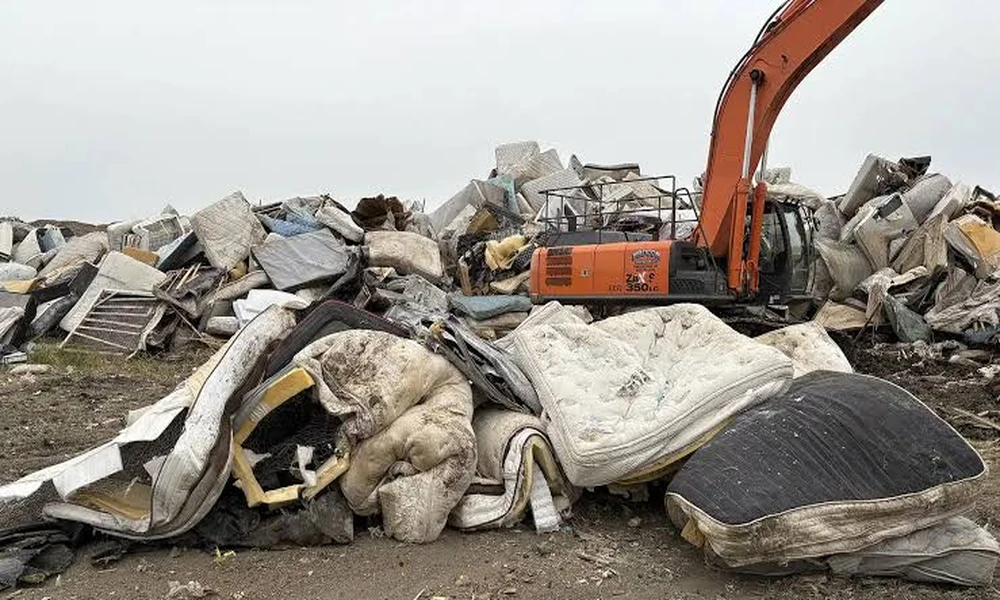
A single discarded mattress can take up as much landfill space as a car. Multiply that by millions tossed each year in Canada, and the scale of the problem becomes impossible to ignore.
The Growing Problem of Mattress Waste in Canada
Scale and Impact of Mattress Disposal
Hundreds of thousands of mattresses reach the end of their lives across Canada annually. In Quebec and Ontario alone, more than 400,000 units are recycled each year, but that barely scratches the surface of total waste generated. Each mattress is a bulky mix of metal, foam, fabric, and wood, difficult to compact, awkward to transport, and notorious for clogging up landfill operations.
Environmental Consequences of Landfilling Mattresses
When mattresses end up in landfills, their materials don’t break down easily. Synthetic fibers, polyurethane foam, and chemical flame retardants can leach into the soil and water, adding toxicity to landfill sites. With so much landfill space dedicated to these unwieldy objects, municipalities face higher disposal costs and faster depletion of landfill capacity.
Challenges in Traditional Waste Management Systems
Traditional waste management systems were never designed with mattresses in mind. Most curbside collection services struggle to handle such oversized, non-compressible items. This leads to illegal dumping or mattresses languishing on streets and in alleyways, creating eyesores and pest hazards.
Innovations in Mattress Recycling Technologies
Overview of Mattress Recycling Processes
Modern mattress recycling involves dismantling each unit, separating its components, and sending materials like steel, foam, and textiles to specialized recyclers. Some facilities manage the process by hand, while others use mechanized shredders and conveyor systems to increase efficiency.
Key Players in Canadian Mattress Recycling
Several companies lead the way with innovative recycling solutions. In Quebec, Ontario, and beyond, specialized recyclers have transformed an environmental headache into a source of recoverable resources. Their commitment is shifting public perception of what mattress waste can become.
How Recyc-Matelas is Revolutionizing the Industry
Among the pioneering efforts, Recyc-Matelas stands out. Handling hundreds of thousands of units per year, their process involves meticulous separation and recovery of materials. The Recyc-Matelas mattress removal service streamlines collection and ensures that discarded mattresses are recycled efficiently, diverting massive volumes from landfills.
Environmental and Economic Benefits of Mattress Recycling
Reduction in Landfill Volume and Toxicity
Mattress recycling dramatically reduces the load on municipal landfills. Steel springs are melted down and reused, foam is repurposed into carpet underlay, and fabric is processed into industrial rags or insulation. This not only saves space but also prevents hazardous substances from contaminating the environment.
Resource Recovery and Material Reuse
Every recycled mattress yields valuable materials. Steel, foam, wood, and textiles can all be repurposed, reducing the demand for virgin resources. These recovered materials fuel multiple industries and close the loop on what would otherwise be a linear waste stream.
Job Creation and Economic Stimulus
Recycling programs don’t just benefit the environment, they create green jobs. From collection to processing to downstream manufacturing, mattress recycling supports employment and spurs economic activity in local communities.
Regional Insights: Mattress Recycling Trends in Quebec and Ontario
Across Quebec and Ontario, recycling rates continue to climb, thanks to a growing network of local programs and awareness campaigns. Municipalities have partnered with leading recyclers, and public buy-in is on the rise.
| Region | Mattresses Recycled Annually | Key Program Features |
|—————-|—————————–|————————————–|
| Quebec | 250,000+ | Municipal drop-off, private pickup |
| Ontario | 150,000+ | Retail take-back, recycling centers |
| France | 1,000,000+ | Nationalized producer responsibility |
Community engagement is essential. Public workshops, collection drives, and educational outreach foster habit change and encourage responsible disposal. Looking abroad, France’s national approach to mattress recycling highlights the potential for even greater scale and efficiency.
Policy and Regulatory Framework Supporting Mattress Recycling
Canada’s approach to waste management is evolving, with provincial governments gradually enacting new extended producer responsibility (EPR) regulations. These policies require mattress manufacturers and retailers to contribute to end-of-life recovery programs.
Incentives like eco-fees and landfill bans for mattresses have begun to shift behavior, but gaps remain. Uniform national policies and expanded infrastructure are needed to close the loop fully and boost recycling rates everywhere.
How Consumers Can Participate in Mattress Recycling
Anyone with an old mattress can be part of the solution. First, check if your mattress is recyclable (most are, unless heavily contaminated). Next, seek out local recycling programs or arrange for municipal pickup. Services like Recyc-Matelas mattress removal make it easy for households and businesses to dispose of mattresses responsibly.
Corporate Responsibility and Industry Collaboration
Mattress manufacturers are starting to design products with recycling in mind, using materials that are easier to separate and process. Partnerships between waste management companies and dedicated recyclers ensure a seamless journey from curbside to recovery facility. As the circular economy model takes hold, industry collaboration is paving the way for a more sustainable future.
Taking Action: Building a Sustainable Mattress Waste Solution
For households, the first step is choosing recycling over landfilling. Businesses can set up dedicated collection events and support local recycling initiatives. Advocating for stronger infrastructure and supporting innovation, through both community engagement and government action, will be the keys to solving Canada’s mattress waste dilemma for good.
